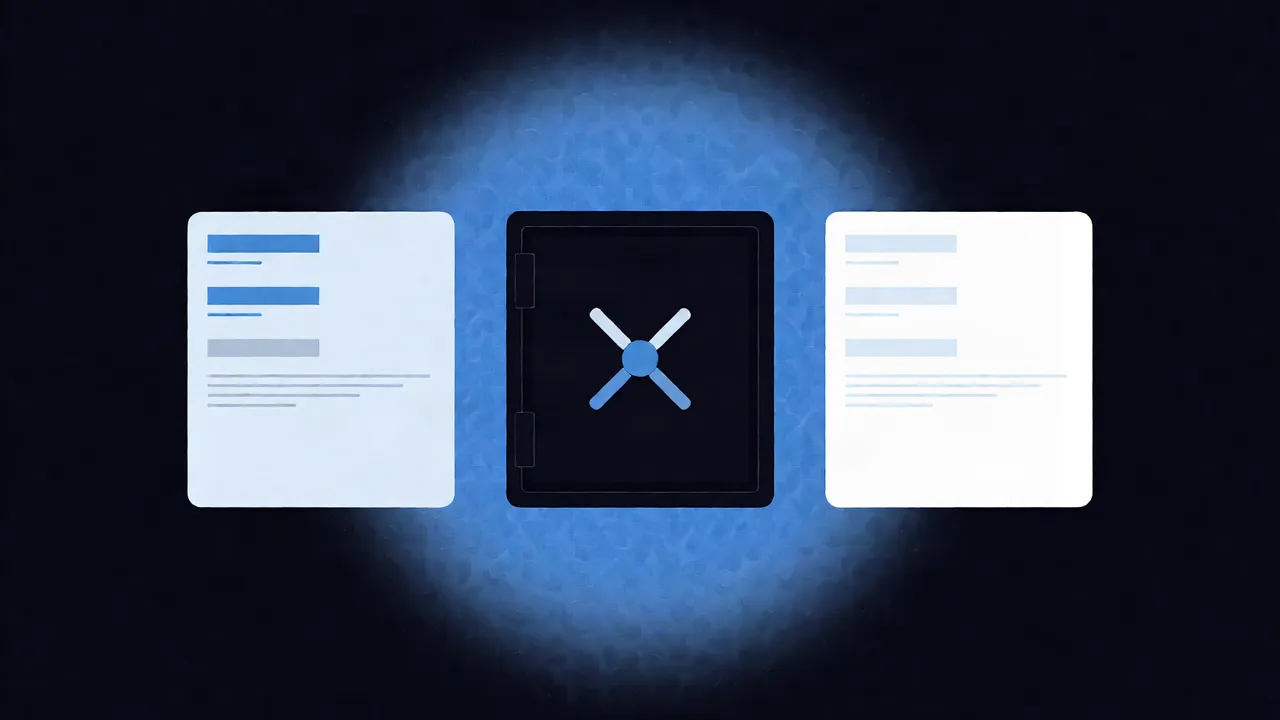
One open-source project describes reversible masking as masking before the prompt leaves your network and restoring in the reply, with streaming-safe unmasking veil. Reversible PHI masking lets an LLM reason over protected health data without permanently destroying it. You swap PHI for tokens before the prompt leaves your network, then restore the originals in the reply so downstream systems can act on them.
Key takeaways
- Redaction destroys PHI; reversible masking preserves it for downstream action.
- Detection and masking happen before the prompt reaches the model; restoration happens after.
- A per-request PHI gate enforces policy on every call, not just at deployment time.
- HIPAA BAA coverage is route-specific (Azure); GDPR and nFADP residency depend on region. Ask your counsel.
Why does traditional PHI redaction fall short for LLM workflows?
Traditional PHI redaction replaces names, dates, and identifiers with [REDACTED] placeholders. That destroys the context an LLM needs to reason clinically, and it makes the original impossible to restore. If a billing system or care coordinator later needs the actual MRN or appointment date, the redacted prompt cannot help them.
Redaction is one-way. An LLM fed a redacted note often hallucinates or gives generic advice because it cannot see the medication, the date, or the care team. Downstream systems that consume the LLM output—coding, billing, scheduling—need the real identifier to act. Reversible masking keeps the utility without keeping the PHI exposed in the model prompt.
What is reversible PHI masking, and how does it work?
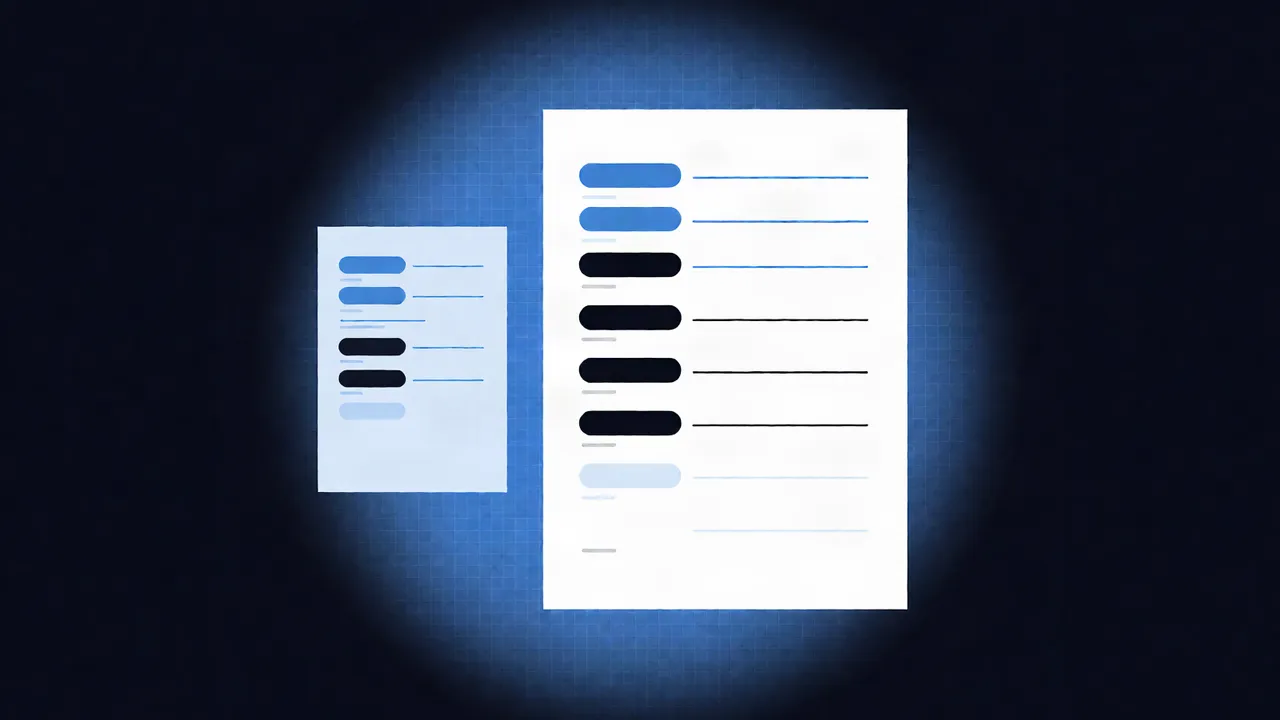
Reversible PHI masking detects protected health information in a prompt, replaces each finding with a token, and stores the original in a request-scoped vault. The LLM receives only tokens. After the model responds, a detokenization step swaps the tokens back so the final output contains the real values. The model never sees raw PHI, but the downstream system does.
The mechanism is a deterministic map: each PHI span becomes a token like [PHI-7f3a], and the vault holds the mapping for that request only. Because the mapping is request-scoped, token collision across patients is avoided. Open-source tooling exists for this pattern: maskchain frames itself as an AI Gateway with a reversible Content Shield (DLP) that can mask, redact, or block PII/PHI/secrets in LLM traffic, and pii-masker-ai offers zero-dependency masking and unmasking for AI prompts and LLM agents.
How do you architect a reversible masking pipeline?

A reversible masking pipeline has four stages: detect, mask, forward, and detokenize. Detection runs before the prompt leaves your network. Masking writes each PHI span to a vault keyed by request ID. The LLM sees only tokens. A response interceptor detokenizes before the reply reaches the caller.
| Component | Responsibility | Where it runs |
|---|---|---|
| Detector | Finds PHI spans using NER or rules | Client side or gateway |
| Token vault | Stores token-to-original mapping | Request-scoped, encrypted |
| LLM proxy | Forwards masked prompt to model | Your infrastructure or region |
| Detokenizer | Restores tokens in the response | Before the reply reaches the caller |
The vault must never log the plaintext PHI. It logs only the token, the entity type, and the request ID. If you use a third-party LLM, the masked prompt goes to their API; the original stays in your vault.
How does clinical NER improve PHI masking accuracy?
Clinical NER identifies PHI by entity type and context rather than by pattern alone. It can distinguish "warfarin" as a medication from "Warfarin" as a surname, and it recognizes clinical abbreviations that generic PII detectors miss. This reduces both false negatives (leaked PHI) and false positives (over-masked prompts that degrade model output).
Generic PII detectors often miss clinical shorthand or flag non-PHI terms. A clinical NER model trained on de-identified clinical text can flag patient names, MRNs, dates of birth, diagnoses, and medication names with higher precision. You still need a human-in-the-loop review for edge cases, but the baseline detection is far more accurate than regex.
How do you implement tokenization and detokenization?
Tokenization maps each PHI span to a unique token and stores the original in a request-scoped vault. Detokenization reverses the mapping in the model response. The mapping must exist only for the life of the request and be destroyed afterward.
import secrets

vault = {}

def mask(text, entities):
 for span in sorted(entities, key=lambda e: e.start, reverse=True):
 token = f"[PHI-{secrets.token_hex(4)}]"
 vault[token] = text[span.start:span.end]
 text = text[:span.start] + token + text[span.end:]
 return text, vault

def detokenize(text, vault):
 for token, original in vault.items():
 text = text.replace(token, original)
 return text
Streaming responses complicate this: you cannot replace a token until you know the full span has arrived. veil describes its approach as streaming-safe, meaning it handles unmasking as tokens stream back rather than waiting for the complete response.
How do you implement a PHI gate for an LLM?
A PHI gate is a per-request enforcement point that inspects the prompt, applies masking, and allows, blocks, or transforms the request before it reaches the model. It runs on every call, not as a one-time deployment setting.
Example request:
curl \
 -H "Authorization: Bearer $TOKEN" \
 -H "X-PHI-Gate: enforce" \
 -H "X-Data-Residency: us-east-1" \
 -d '{"messages": [{"role": "user", "content": "Summarize patient note"}]}'
Response headers should include X-PHI-Masked: true and X-PHI-Entities-Found: 3. The gate logs the request ID, masking decision, and entity count. It does not log the prompt body or the original PHI. For a step-by-step implementation, see Implementing Per-Request PHI Gates for LLM APIs: A How-To Guide.
How do you ensure data residency and auditability with reversible masking?
Data residency means the masking vault and LLM inference remain in the same legal jurisdiction. Auditability means every call produces an immutable record of what was masked, when, and by whom—without logging the PHI itself.
On our platform, HIPAA BAA coverage is available on Azure routes only; we do not claim HIPAA certification. For European workloads, GDPR and the Swiss nFADP impose residency and transfer rules that vary by region. Data Residency for LLMs in Europe: A 2026 Technical Deep Dive into GDPR and the EU AI Act covers the regional split in detail, and HIPAA Compliant LLM APIs: A 2026 Guide to Secure PHI Handling explains the BAA boundary.
| Regime | Requirement | Where it applies |
|---|---|---|
| HIPAA | BAA + safeguards | Azure routes only |
| GDPR | Residency + DPA | EU regions |
| nFADP | Residency | Swiss regions |
Audit logs should record the request ID, which entities were masked, and the routing decision. They must not contain the original PHI. Ask your counsel before relying on any technical control as proof of legal compliance.
Can synthetic data generation replace masking for healthcare LLMs?
No. Synthetic data generation is useful for training and testing, but it cannot replace reversible masking when the LLM must act on a specific patient's real record. Synthetic records lack the patient-specific identifiers that make a clinical recommendation actionable.
Use synthetic data to build and evaluate the model. Use reversible masking in production when the prompt contains real PHI and the output must feed a downstream system that needs the original values. The two approaches complement each other; they do not substitute.
Where else does reversible masking apply beyond healthcare?
Finance and legal teams face the same problem: the LLM needs account numbers, transaction IDs, or case citations to reason, but those values must not leave the network in plaintext. Reversible masking works wherever the LLM output feeds a downstream system that requires the original identifier.
In finance, a model might draft a dispute letter that references an account number. In legal, it might summarize a case and cite a docket number. Mask the identifier before the prompt, let the model reason over the token, then restore the identifier before the document is filed or sent.
What are the limitations of reversible PHI masking in production?
Reversibility is not a privacy free pass. If the token vault is compromised, every masked value can be re-identified. Token collisions, streaming edge cases, and missed entities can leak PHI or corrupt the output. The pipeline also adds latency to every request.
Protect the vault with encryption at rest and strict access controls. Rotate keys regularly. Budget for the extra hop introduced by masking and detokenization. Accept that no detector is perfect; combine masking with a per-request PHI gate and human review for high-stakes outputs. Ask your counsel about your regulatory obligations before deploying.
If you are evaluating reversible masking for a regulated workload, start with the per-request gate pattern and keep the vault outside the LLM provider's network. Our platform handles per-request PHI routing, data residency, and an audit trail on every call. See cloudsitus.com for details.
FAQ
What is PHI data masking for LLMs?
PHI data masking for LLMs replaces protected health information in prompts with tokens or placeholders before the prompt reaches the model, so the model can reason without seeing raw PHI.
What de-identification techniques work for LLMs?
Techniques include redaction, pseudonymization, and reversible tokenization. Reversible masking is the only one that restores original values for downstream systems while keeping the prompt free of PHI.
Can synthetic data generation replace masking for healthcare LLMs?
No. Synthetic data works well for training and evaluation, but it cannot replace reversible masking for live patient care where the LLM needs real identifiers to produce actionable output.
How do you implement a PHI gate for an LLM?
A PHI gate sits between the caller and the model, inspects each request, masks detected PHI, enforces allow/block/transform rules, and logs the decision without logging the payload.
How do you secure LLM prompts that contain PHI?
Mask PHI before the prompt leaves your network, send only tokens to the model, detokenize the response inside your boundary, and log only metadata—never the original PHI.