
Confidential computing for LLMs keeps prompts and model weights encrypted while they are in use, not just at rest or in transit. A May 2026 arXiv survey (2605.03213v1) frames this as the missing control layer for agentic AI handling secrets. Remote attestation lets you cryptographically verify the enclave before you send it sensitive data.
Key takeaways
- TLS and disk encryption leave LLM prompts exposed in plaintext GPU memory during inference.
- Remote attestation proves the hardware, firmware, and workload match a known-good measurement before any secret is released.
- Intel TDX and AMD SEV-SNP cover CPU VMs; NVIDIA Confidential Computing extends encryption to GPU memory.
- Confidential computing complements—but does not replace—access control, output filtering, and data minimization.
Why Isn't Traditional Encryption Enough for LLM Data in Use?
Traditional encryption protects data at rest and in transit, but not data in use. When an LLM runs inference, the prompt and the model weights are decrypted into GPU memory. Anyone with host-level access, a compromised hypervisor, or a malicious cloud administrator can read that memory. Confidential computing closes the gap by keeping memory encrypted inside a hardware enclave until the CPU or GPU needs it.
Red Hat’s October 2025 guide on private data inference with proprietary LLMs makes the same point: encryption in transit does not protect the prompt while the model is actively generating tokens.
What Is Confidential Computing and How Does It Protect LLM Workloads?
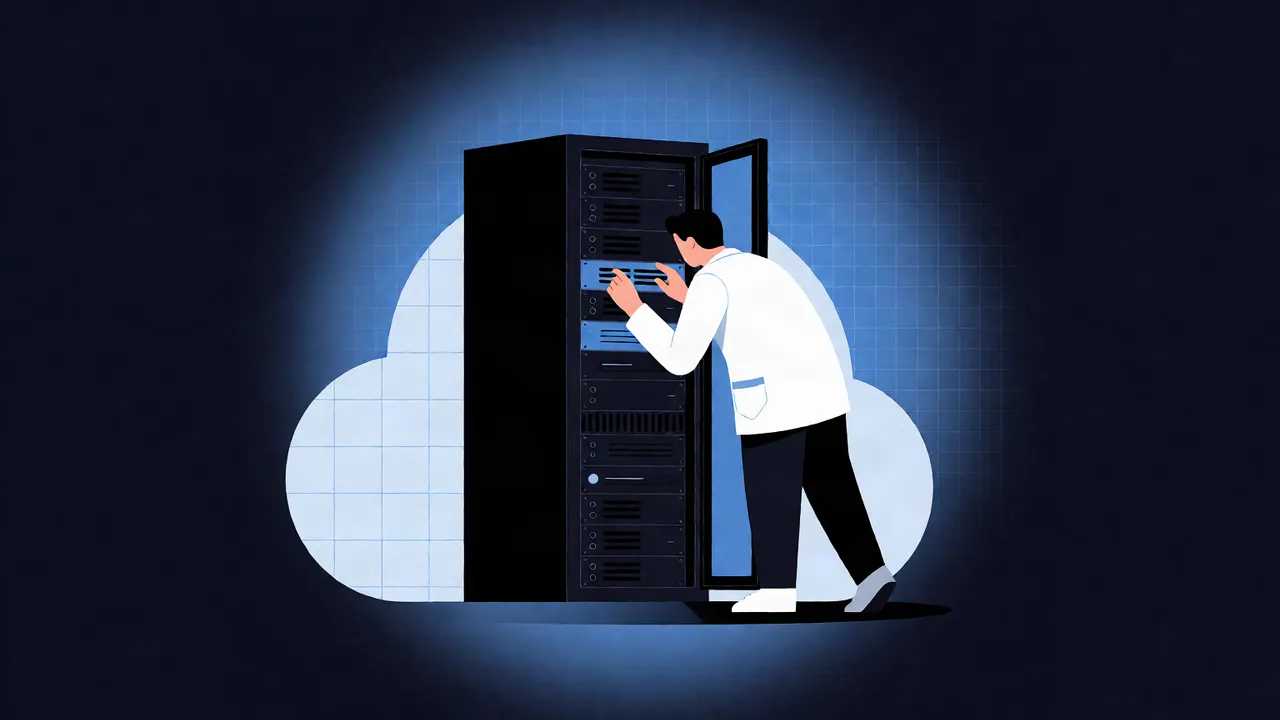
Confidential computing uses hardware-based trusted execution environments (TEEs) to encrypt memory and isolate processor state from the host, hypervisor, and cloud administrator. For LLM workloads, the model weights and the user prompt are decrypted only inside the enclave, where inference happens. The host sees ciphertext.
This maps directly to per-request PHI routing: each request enters the enclave, is processed, and the response leaves without the payload being logged on the host. Platforms such as Phala’s confidential computing documentation already list GPU TEE support for NVIDIA H100, H200, and B300, which means GPU memory encryption is moving from research to product.
How Does Remote Attestation Prove Your LLM Environment Is Secure?
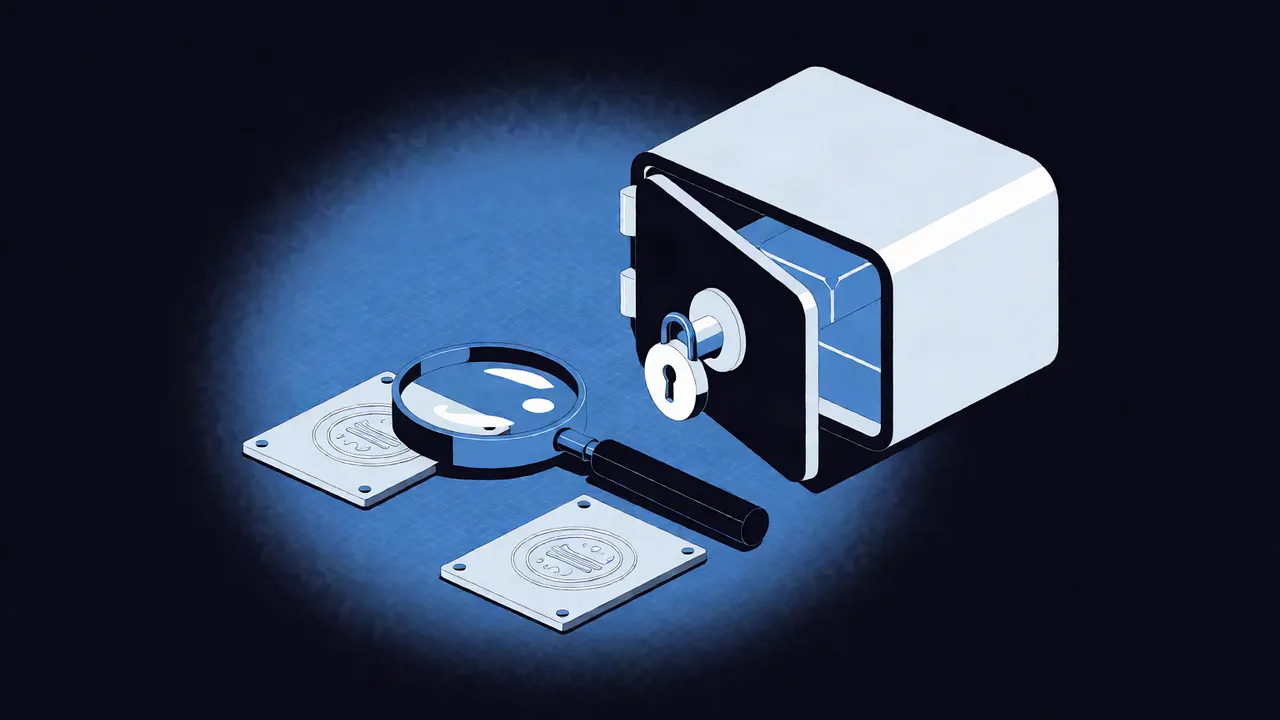
Remote attestation is a challenge-response protocol. The hardware reports a signed measurement of the enclave—firmware, kernel, bootloader, model hash, and policy—to a verifier. The verifier checks that measurement against a known-good value. Only if they match does the enclave unseal secrets or accept the prompt.
For LLMs, this means you can prove to an auditor that the inference container processing a customer’s PHI has not been tampered with. The May 2026 arXiv survey on confidential computing for agentic AI covers this model as the foundation for agents that handle secrets.
Here is what the request path looks like in practice:
curl -X POST \
 -H "Authorization: Bearer $TOKEN" \
 -H "Attestation-Token: $QUOTE_JWT" \
 -H "X-Region: us-east-1" \
 -H "Content-Type: application/json" \
 -d '{"model": "llama-3-8b", "prompt": "..."}'
The Attestation-Token carries a signed quote from the TEE. The gateway verifies it before forwarding the request. Response headers should include X-Attestation-Verified: true and X-Request-Id, but never the prompt text. What gets logged: request ID, timestamp, region, and token count. What does not get logged: the prompt, the completion, or the model weights.
Intel TDX, AMD SEV-SNP, and NVIDIA Confidential GPUs in 2026
Intel TDX and AMD SEV-SNP encrypt VM memory and provide CPU-side attestation. NVIDIA Confidential Computing extends that protection to GPU memory, so model weights and activations never sit in plaintext on the device. In 2026, CPU attestation is mature; GPU attestation is the newer half of the stack.
| Technology | Layer | Memory Encryption | Attestation Mechanism | Best For |
|---|---|---|---|---|
| Intel TDX | CPU VM | Yes | TDX quote, Intel Attestation Service | General confidential VMs |
| AMD SEV-SNP | CPU VM | Yes | SNP attestation, VCEK | Confidential VMs, broad cloud support |
| NVIDIA Confidential Computing | GPU | Yes (GPU memory) | GPU attestation, CSP attestation | LLM inference, model weight protection |
If you are running LLM inference, you generally need both: a confidential VM to host the serving stack and a confidential GPU to hold the weights and the KV cache.
What Is the Performance Cost of Confidential LLM Inference?
The confidentiality tax appears in three places: memory encryption, attestation handshakes, and GPU context switches. For token-heavy generation, attestation is usually a one-time cost at session or deployment start. The recurring cost is memory bandwidth and encrypted page faults, which show up most on memory-bound workloads.
I would not quote a universal percentage overhead—it depends on model size, batch size, and whether you are CPU-bound or GPU-bound. What I would do is run a baseline on unencrypted instances, then enable confidential computing and compare time-to-first-token and tokens-per-second. If your workload is latency-sensitive, measure before you commit.
How to Implement Confidential LLM Inference: Practical Steps
You start with the hardware boundary and work outward. The goal is to ensure the prompt is never visible to the host OS or hypervisor.
- Provision a confidential VM (Intel TDX or AMD SEV-SNP) or a confidential GPU instance.
- Attest the enclave through the platform’s attestation service and retrieve a signed quote.
- Deploy the inference server inside the enclave so weights and prompts are decrypted only there.
- Route client requests through an API gateway that forwards the attestation token and strips or masks identifiers before logging.
- Log metadata only: request ID, timestamp, region, and token count. Never log prompt or completion payloads on the host.
Build Your Own Confidential Computing Environment or Use a Hyperscaler?
Build your own if you need custom attestation policies, air-gapped deployments, or region residency that hyperscalers do not offer. Use a hyperscaler directly if you want faster time to market and their managed attestation service.
For HIPAA, remember that BAA coverage is only on the Azure routes; do not claim HIPAA certification elsewhere. For GDPR or nFADP, confirm region residency with your counsel before you promise it to customers. If you are deciding where to run inference, see our guide on architecting for LLM data residency.
What Confidential Computing Doesn't Solve for LLM Privacy
Confidential computing does not stop prompt injection, model inversion, output leakage, or a compromised application layer. It also does not replace data minimization, access control, or real-time output filtering. If you are handling regulated data, combine it with output filtering for regulated industries and data minimization for LLMs. Ask your counsel about how this fits your HIPAA or GDPR posture.
If you need per-request PHI routing, region residency, and an audit trail on every call, we can help you scope a confidential LLM deployment. Start at CloudSitus.
FAQ
What is remote attestation for LLMs?
It is a cryptographic proof that the hardware and software running your LLM inference match an expected measurement before any sensitive prompt is accepted.
Does confidential computing protect LLM prompts in memory?
Yes. Prompts and weights are decrypted only inside the hardware enclave; the host and hypervisor see ciphertext.
How much overhead does GPU confidential computing add?
It depends on your model and batch size. Attestation is typically one-time; the recurring cost is memory bandwidth and encrypted page faults. Measure your own stack.
Is confidential computing required for HIPAA or GDPR?
It is not required by itself, but it strengthens your technical posture. BAA coverage on our side is limited to Azure routes, and residency questions under GDPR or nFADP should go to your counsel.
Should I build my own confidential computing platform or use a hyperscaler?
Build if you need custom attestation or air-gapped deployments. Use a hyperscaler for managed attestation and faster time to market.